Google I/O 2026: The Agentic Era and What It Means for Web Agencies
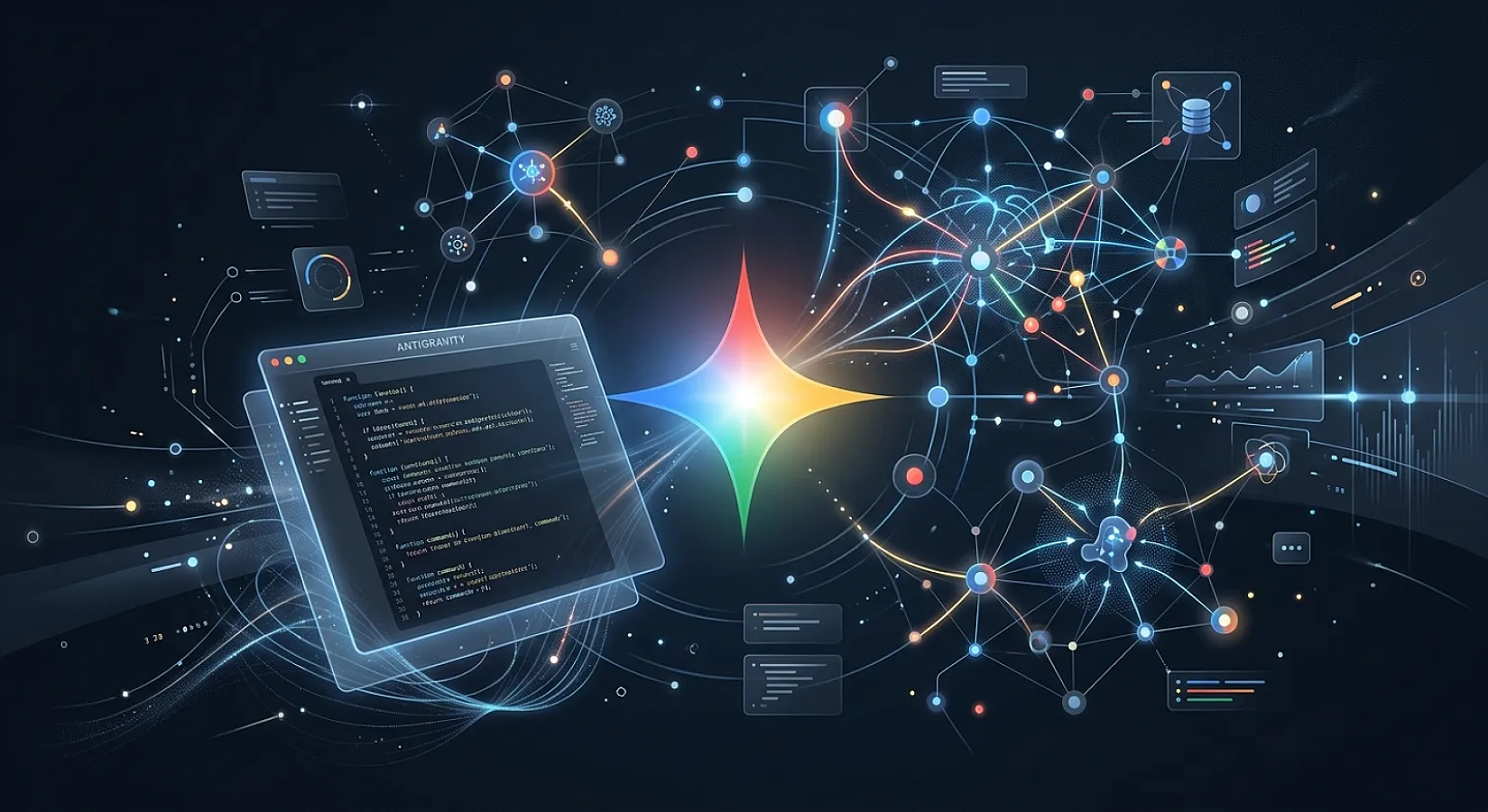
Google I/O 2026 confirmed the chatbot phase is over. Alphabet CEO Sundar Pichai announced the "agentic Gemini era." The industry is moving past AI that answers questions and adopting autonomous agents that execute multi-step workflows in the background. Businesses must adapt their operations to survive this shift.
Gemini Spark and the 24/7 Cloud Employee
Google introduced Gemini Spark, a personal AI agent running continuously on dedicated virtual machines in Google Cloud. Think of it as Google's mainstream version of OpenClaw. During the keynote, Josh Woodward demonstrated Spark organizing a block party. It checked RSVPs in Google Sheets, drafted follow-up emails, and created a presentation deck. The user gave the command and closed the laptop. The agent kept working.
The Cafali Perspective: Startups must view Gemini Spark as a scalable operational layer. Lean teams can delegate administrative tasks like CRM updates, client onboarding sequences, or meeting coordination without adding headcount. Spark acts exactly like OpenClaw for the masses by handling background execution.
For web agencies, the primary opportunity is integration. Spark will connect to third-party tools via MCP this summer. Businesses will demand experts who can wire their proprietary data into these Google agents. Agencies building only static websites will miss the market entirely. They must transition into AI workflow integrators.
Search Is Now a Custom App Builder
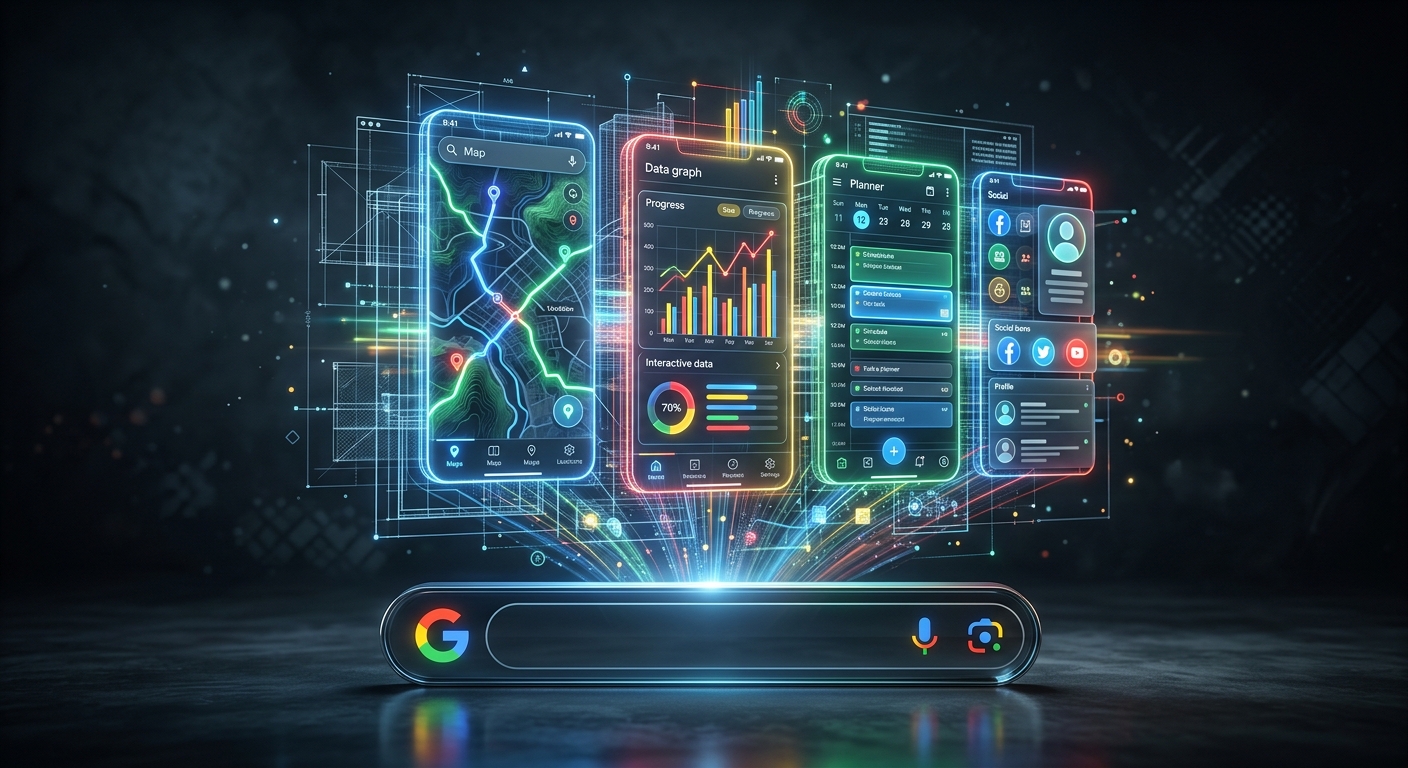
Google Search is undergoing a radical transformation. Liz Reid demonstrated how Search is moving from retrieving links to building custom experiences. Using Generative UI, Search relies on Gemini 3.5 Flash and the Antigravity harness to write code on the fly. It renders interactive widgets directly in the search results tailored to the specific query.
Google also introduced Information Agents. A user can ask Google to monitor biotech stocks with positive cash flow. The agent scans the web continuously and pushes real-time synthesized updates when the market moves.
The Cafali Perspective: This is the next evolution of SEO. When Google generates custom interfaces and interactive widgets to answer queries, traditional web traffic to client sites will plummet. Users will have no reason to click through.
Agencies must adapt by optimizing for AI consumption. Websites need to expose structured data and APIs so Information Agents can read them instantly. A client's website must function as a data source for Google's agents rather than a visual storefront for human users. Agencies need to pivot to Agent-Oriented Optimization.
The Economics of Scale with Gemini 3.5 Flash

Agentic workflows consume massive amounts of tokens because agents talk to each other in loops to solve problems. Google launched Gemini 3.5 Flash to make this viable. This model is optimized specifically for agentic coding and autonomous tasks. Pichai noted it is four times faster than comparable frontier models and operates at a fraction of the cost.
The Cafali Perspective: Cost previously prevented small businesses from adopting AI automation at scale. A single complex agent loop could drain an API budget in hours. Gemini 3.5 Flash changes the math completely.
Startups can now run parallel subagents without burning through capital. Agencies can build and sell sophisticated AI features to clients with smaller budgets. The technology is affordable enough to become a standard inclusion in any SaaS or web platform.
The Mandate for Web Agencies
The I/O 2026 announcements create a massive service gap. Business owners see the power of these tools but lack the technical expertise to implement them. Web agencies must evolve their value proposition immediately. The future belongs to agencies that build automated, agent-driven systems to run a client's business operations.